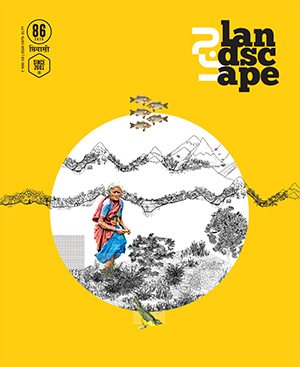
| LA86 |
|
EDITORIAL
MAPPING | COMMONS | ECOLOGY
This issue features profound ideas and critical thinking from some of the fields that inform contemporary landscape architecture practice and research in India—role of mapping, commons in landscape, and landscape thinking informed by ecology and conservation. It is interesting to note that these ideas are not linear in their definition or understanding. Their creative manifestations are layered and nuanced, addressing environmental, cultural, and social concerns alongside their core values and disciplinary inquiries.
In Mapping as a Thinking Tool: Interpreting Indian Landscapes, Iqtedar Alam introduces the section that showcases multi scalar—geographical and culture regions and sites—projects that use mapping to explore, understand, conserve, and manage diverse landscapes. As increasing realms of development come under formal and exclusive frameworks, the idea of the commons gains renewed importance. Rethinking Landscapes through Commons, by Maithily Velangi, brings this discussion to the forefront and introduces the many ways in which professionals and academicians are attempting to make the idea mainstream. In Ecology and Conservation, Dr Gurudas Nulkar’s Landscape, Ethics and Ecology: Conservation through Design, observes that the ways in which we structure our landscapes are fundamentally philosophical questions that bring to the forefront our biases towards all actors involved. The essay further elaborates on the philosophy of Aldo Leopold and his environmental ethics as a means of creating balance within this equation. Rushika Khanna, in Terrawild(-ing): A Language of Process, Flux, and Wild Ecologies notes that the idea of working with nature is evolving from regulated, controlled, and high-maintenance aesthetics towards more natural and wild ecologies that are closer to the true grain of nature. She contrasts the struggles of the former with the adaptive and negotiated qualities of the latter, calling for a shift in planting design practices that more authentically reflect the nature of “nature” itself. Permaculture in design practice by Anushree Chitnis demonstrates some of these ideas in landscape practice, where design contributes in creating a holistic living environment taking in account well being and role of other life forms.
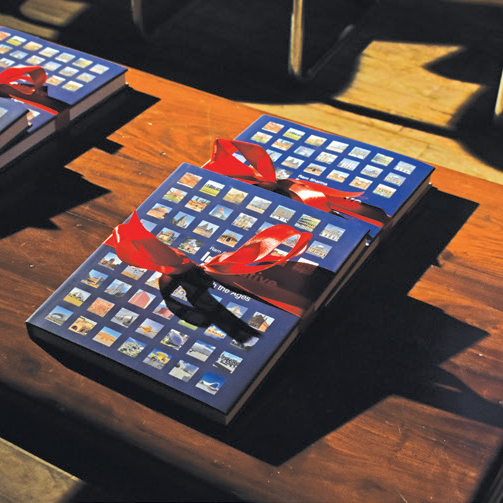
Innovative Architecture Through the Ages by Ram Sharma is our recently published book that includes over two hundred architectural marvels spanning diverse geographies and eras. It offers a rich narrative of iconic sites across India, Europe, and the United States, shaped by influences as varied as democracy, religion, monarchy, and public welfare. A special feature on the book presents reflections shared by Meera Chatterjee (co-editor), Raj Rewal, Ashok B. Lall, K.T. Ravindran, Priyaleen Singh, and Rajat Ray during the release function, along with its review, Timelessness of the wonders of Architecture by Narendra Dengle.
|
|
|
|
HUMANIZING PLANNING
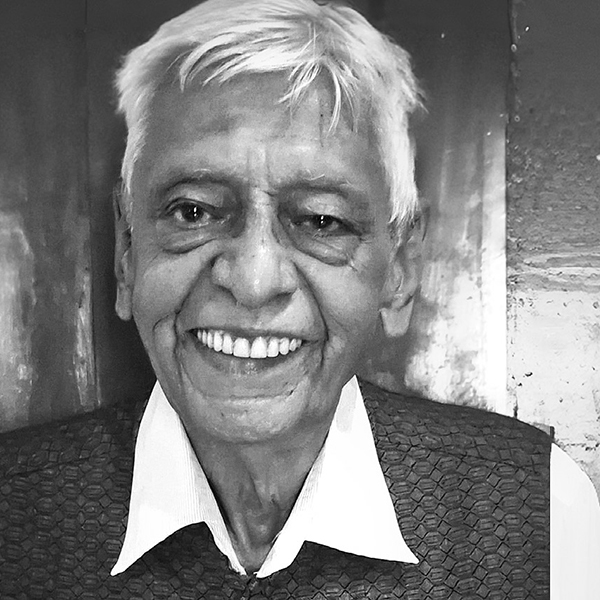
REMEMBERING E.F.N. RIBEIRO
A.G.K. Menon |
|
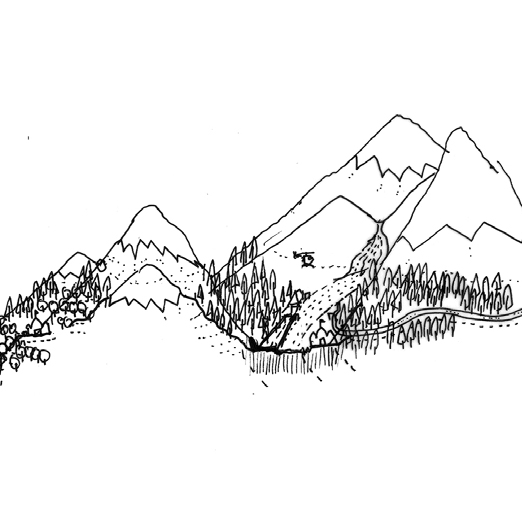
TRANSECTS ACROSS THE GARHWAL HIMALAYAS
Ashim Kumar Manna |
|
|
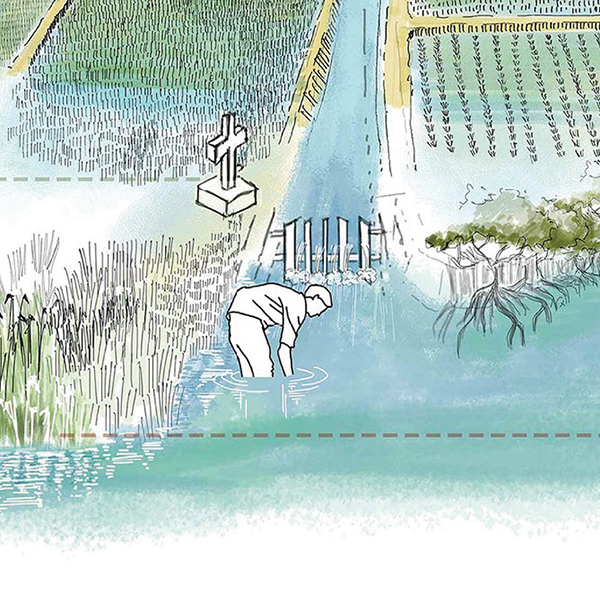
COMMONING THE LANDSCAPE
Rahul Paul |
|
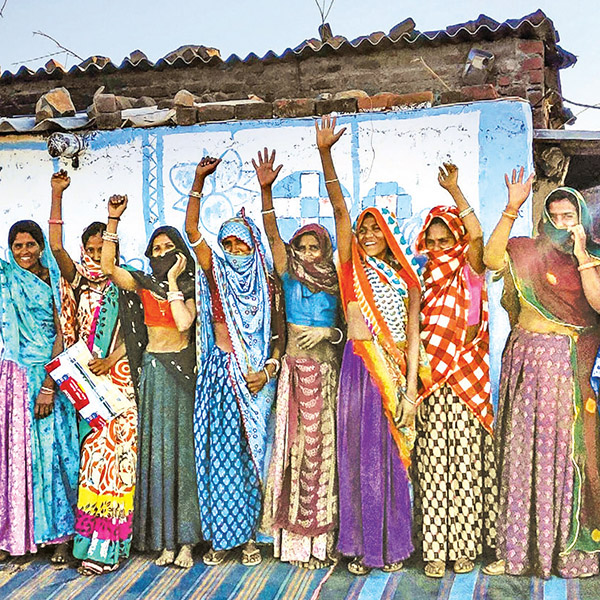
NOT JUST PARCELS OR PLOTS
CAN COMMONS INFORM A NEW ‘WAY OF SEEING’?
Prayag Arora-Desai, Kanchi Kohli and Avadhoot Khanolkar |
|
|
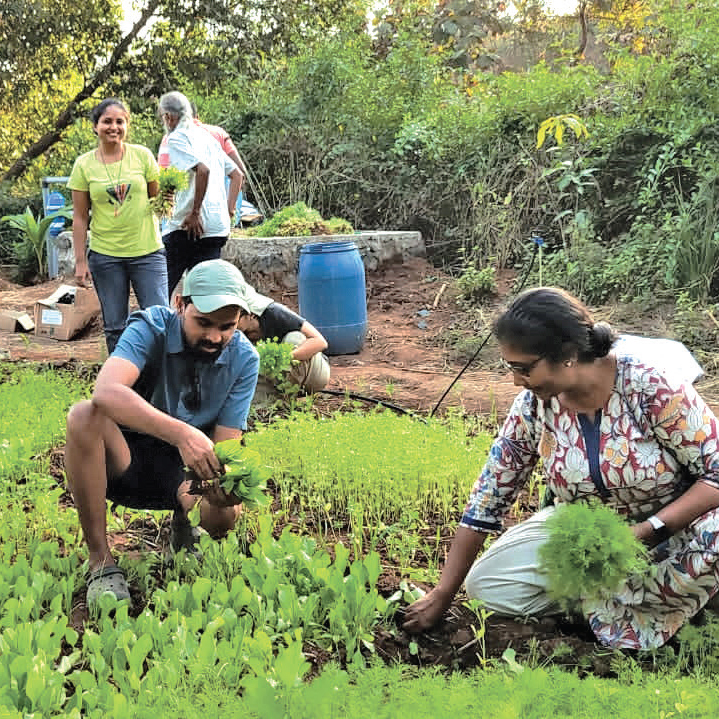
PERMACULTURE IN DESIGN PRACTICE
Anushree Chitnis |
|
ACROSS TIMES AND PLACES
Meera Chatterjee |
|
|
|
|
|